

 By
Introduction
Giving birth to a baby is one of the most physically and emotionally demanding experiences in a woman’s life. While the arrival of a newborn brings happiness, the mother’s body goes through a completely different journey after delivery.
Pregnancy affects almost every system in the body. Hormone levels change, abdominal muscles stretch, nutritional requirements increase and the body needs time to recover from childbirth. Some women recover relatively quickly, while others experience health problems that continue for several months.
Unfortunately, postpartum health often receives less attention than pregnancy itself. Most of the focus shifts towards the newborn, and mothers sometimes ignore their own physical and emotional needs.
But here is something important: Taking care of the mother’s health is just as important as taking care of the baby.
From hormonal imbalance and hair loss to back pain, anaemia and postpartum depression, several health issues can develop after childbirth. Understanding these problems is the first step towards managing them properly.
1. Hormonal Imbalance After Pregnancy
Hormonal changes are among the most significant changes a woman’s body experiences after childbirth.
During pregnancy, hormones such as oestrogen and progesterone increase considerably to support the growing baby. After delivery, these hormone levels drop rapidly. This sudden change can affect a woman’s mood, energy levels, sleep, skin and overall well-being.
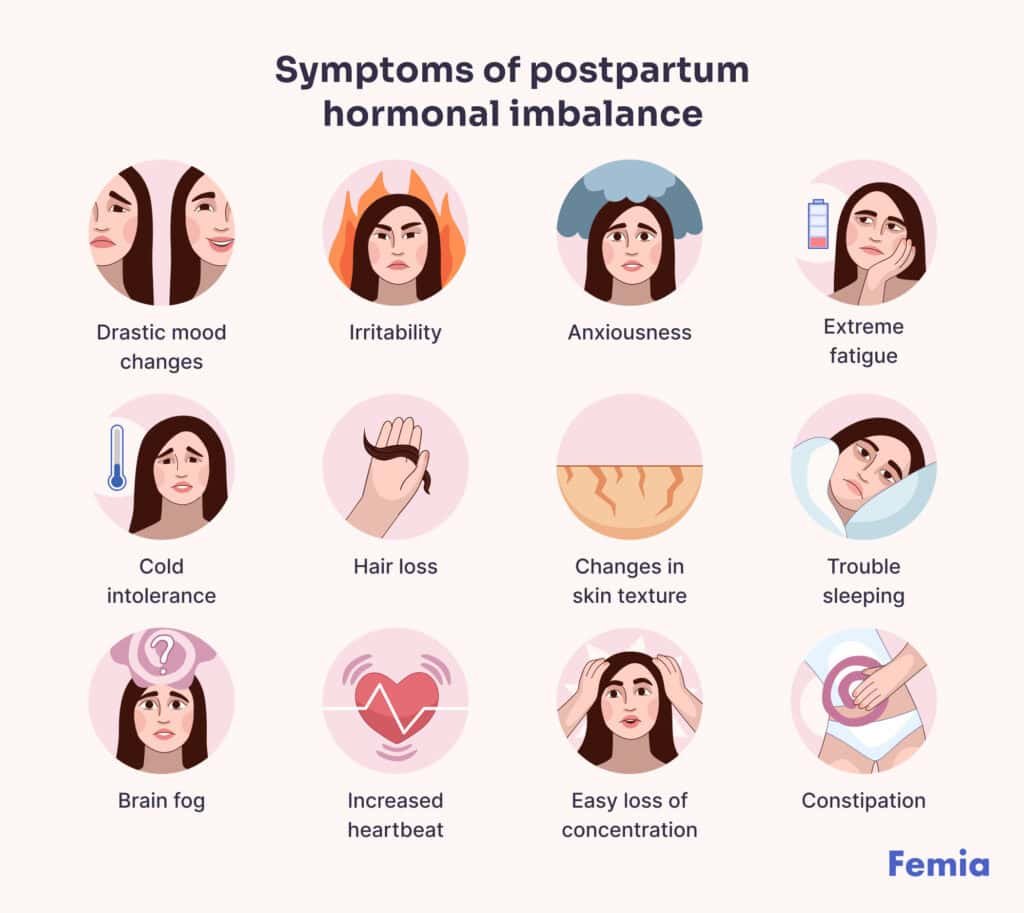
Common symptoms
- Sudden mood swings and irritability.
- Excessive sweating, particularly at night.
- Changes in menstrual cycles.
- Unusual tiredness and low energy.
- Changes in skin and hair.
- Difficulty sleeping.
- Reduced sexual desire.
Some women may also develop postpartum thyroiditis, a condition in which the thyroid gland becomes inflamed after childbirth. It can initially cause symptoms of an overactive thyroid and later an underactive thyroid.
How to manage hormonal changes
There is no single treatment for every postpartum hormonal problem. Management depends on the underlying cause.
Some helpful steps include:
- Eat balanced meals containing protein, healthy fats, fibre and essential micronutrients.
- Get adequate rest whenever possible.
- Include gentle physical activity after receiving medical clearance.
- Avoid extreme dieting and excessive exercise.
Consult a doctor if symptoms are persistent or interfere with everyday life.If thyroid problems are suspected, a doctor may recommend thyroid blood tests and appropriate treatment.
2. Postpartum Hair Loss
Many women notice increased hair shedding a few months after giving birth. Finding large amounts of hair on a pillow, comb or bathroom floor can be frightening.However, postpartum hair loss is generally temporary.
During pregnancy, increased oestrogen levels keep more hair follicles in the growing phase. After childbirth, hormone levels fall, causing many hairs to enter the resting and shedding phases together.This condition is known as postpartum telogen effluvium.
What can help?
- Eat protein-rich foods such as eggs, lentils, dairy products and fish.
- Include iron-rich foods such as spinach, beans and lean meat.
- Avoid excessive heat styling and harsh chemical treatments.
- Use a gentle shampoo and avoid tight hairstyles.
Consult a doctor if hair loss is severe, patchy or continues longer than expected.Iron deficiency and thyroid disorders can also contribute to hair loss, so persistent symptoms deserve medical evaluation.
3. Postpartum Depression and Mental Health Problems
Physical recovery is only one part of postpartum health. Emotional and psychological well-being are equally important.After childbirth, women experience hormonal changes, sleep deprivation, new responsibilities and sometimes a lack of emotional support.
Some women experience temporary mood changes, commonly called baby blues. These usually improve within about two weeks.However, postpartum depression is different. It is a medical condition that can develop shortly after childbirth or even months later.
Common symptoms
- Persistent sadness or low mood.
- Feeling hopeless or worthless.
- Excessive anxiety and constant worrying.
- Difficulty sleeping even when the baby is sleeping.
- Loss of interest in everyday activities.
- Difficulty bonding with the baby.
- Feeling overwhelmed or unable to cope.
How to manage postpartum depression
Postpartum depression is treatable, and asking for help is not a sign of weakness.
Treatment may include:
- Psychotherapy:Physical recovery is only one part of postpartum health. Emotional and psychological well-being are equally important.
- Medication: Doctors may prescribe antidepressants when appropriate. Some medicines can be used during breastfeeding after an individual assessment.
- Family support: Partners and family members can help by sharing childcare responsibilities and allowing the mother time to rest.
- Daily routine: Gentle walks, regular meals and adequate sleep can support overall mental well-being.
If a mother experiences thoughts of harming herself or her baby, urgent medical and mental health support is essential.en manage negative thoughts and emotional difficulties.
4. Weight Gain and Belly Fat After Pregnancy
One of the most noticeable physical changes after pregnancy is an increase in abdominal size and body weight.Many women expect their stomach to return to its previous shape immediately after delivery. In reality, the uterus, abdominal muscles, skin and connective tissues need time to recover.
Pregnancy can also cause abdominal muscle separation, known as diastasis recti.This happens when the two main abdominal muscles move apart as the growing uterus stretches the abdominal wall.
What should women do?
- The first goal should be recovery rather than rapid weight loss.
- Start with gentle walking when medically appropriate.
- Eat balanced meals rather than following crash diets.
- Include protein in daily meals.
- Drink sufficient water.
- Avoid aggressive abdominal workouts during early recovery.
Consult a physiotherapist if abdominal separation remains noticeable or causes discomfort.
A gradual return to exercise is generally more beneficial than trying to lose pregnancy weight quickly.
5. Anaemia and Nutritional Deficiencies
Anaemia is another important health concern after childbirth.During pregnancy and delivery, a woman’s iron requirements increase. Blood loss during childbirth can further reduce iron levels, potentially resulting in iron-deficiency anaemia.
Common symptoms
- Persistent fatigue.
- Dizziness or light-headedness.
- Pale skin.
- Shortness of breath during activity.
- Headaches.
- Weakness and reduced concentration.
Foods that support recovery
A balanced diet can help replenish important nutrients.
Iron-rich foods:
- Spinach and other leafy vegetables.
- Lentils and chickpeas.
- Beans.
- Meat and fish.
- Iron-fortified cereals.
Vitamin C sources:
- Oranges.
- Guava.
- Amla.
- Lemon.
- Tomatoes.
Vitamin C helps the body absorb iron from plant-based foods.If anaemia is suspected, a doctor may recommend a complete blood count and iron studies. Iron supplements should be taken according to medical advice rather than randomly.
Best Exercises for Postpartum Recovery
Exercise can play an important role in rebuilding strength, improving mobility and supporting mental health after pregnancy.However, postpartum exercise should not be treated like a normal weight-loss programme.
The body needs time to heal, particularly after a Caesarean section, significant tearing or other birth complications
.
The following activities can be considered when medically appropriate.
1. Gentle Walking
Walking is one of the simplest ways to return to physical activity.
Benefits:
- Improves general cardiovascular fitness.
- Supports circulation.
- Helps improve mood.
- Gradually rebuilds endurance.
Start with a short, comfortable walk and increase the duration according to your recovery.
2. Pelvic Floor Exercises
These exercises help rebuild pelvic floor muscle strength and improve bladder control.
Practise gentle contractions followed by complete relaxation.
3. Diaphragmatic Breathing
Deep breathing can help restore coordination between the diaphragm, abdominal muscles and pelvic floor.
How to perform:
- Lie comfortably with your knees bent.
- Place one hand on your chest and another on your abdomen.
- Slowly breathe in through your nose.
- Allow your abdomen to expand naturally.
- Exhale slowly without forcing your stomach inward.
- Practise for a few minutes.
4. Gentle Pelvic Tilts:- Pelvic tilts can help improve lower-back mobility.
How to perform:
- Lie on your back with knees bent and feet flat.
- Gently tighten your abdominal muscles.
- Tilt your pelvis so your lower back moves towards the floor.
- Hold briefly.
- Relax and repeat.
Only perform this exercise if it is comfortable and appropriate for your stage of recovery.
5. Gentle Stretching
Light stretching can help reduce stiffness in the shoulders, neck and back.
Focus on comfortable movements rather than forcing a stretch.
Stop if you experience pain, pelvic heaviness, increased bleeding or abdominal discomfort.